What is IEC 62305?
IEC 62305 is the international standard for protecting structures, people and systems against lightning. This guide explains how it models lightning damage, how it decides whether protection is needed, the terms that run through every assessment, and what changed in the 2024 third edition.
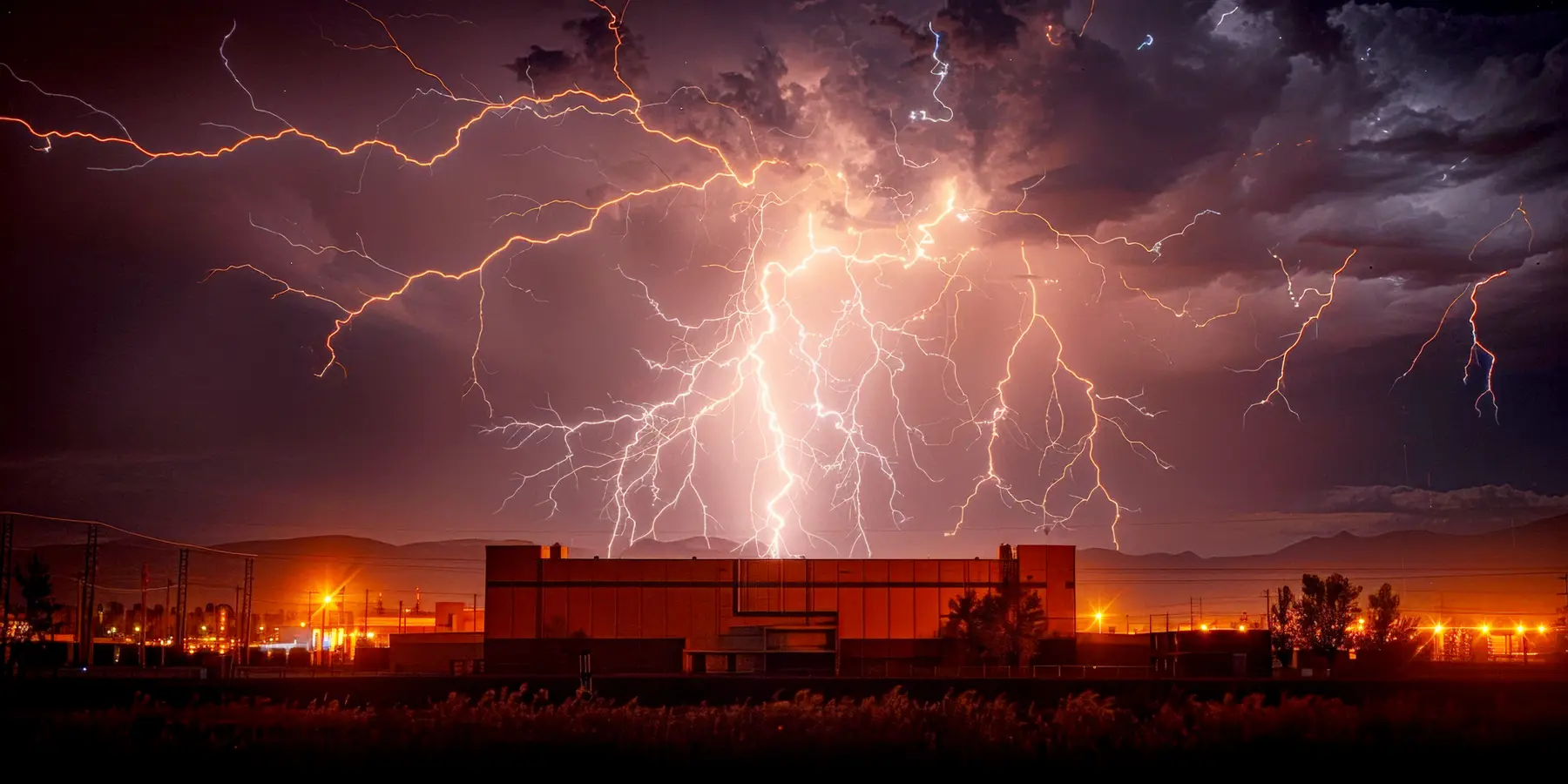
IEC 62305 is the international standard for protection against lightning.
Published by the International Electrotechnical Commission (IEC) and adopted nationally across India, the Middle East, Africa, Asia, Oceania, Europe and the UK, it is the reference most of the world uses to decide whether a structure needs lightning protection and how that protection should be designed, installed and maintained.
What sets it apart from older, prescriptive rules is that it works from risk. Instead of applying a fixed formula to every building, you describe the structure and its surroundings, the method estimates how often a strike is likely to cause real harm, and that figure is checked against a level of risk society is prepared to tolerate. Protection is only specified where the risk is genuinely too high, and the assessment shows precisely which measures bring it back into line. This guide walks through how the standard thinks about lightning, the four parts it is published in, the vocabulary that runs through every assessment, and what the 2024 third edition changed.
How IEC 62305 thinks about a lightning strike
Everything in the standard rests on one chain of cause and effect: a strike happens somewhere, it causes a type of damage, and that damage leads to a type of loss. Understanding those three layers is the key to reading any IEC 62305 assessment.
Where the strike lands (the four sources of damage). The standard groups strikes by where they hit relative to the structure: a direct flash to the structure (S1), a flash to the ground near it (S2), a flash to a service line that enters it such as power or telecoms (S3), and a flash to the ground near such a line (S4). Each source threatens the building in a different way, which is why the risk method treats them separately.
What the strike does (the three types of damage). A strike can injure people through touch and step voltages (D1), cause physical damage such as fire, explosion or mechanical destruction (D2), or knock out the electrical and electronic systems inside through the electromagnetic pulse it radiates, known as LEMP (D3). A single strike often causes more than one of these at once.
What it costs (the four types of loss). Damage matters because of what is lost. IEC 62305-2:2024 (Ed.3) recognises three kinds of loss: injury to people (L1), physical damage to the building and what it holds (L2), and failure of the systems inside it (L3). The 2010 second edition had four, running to a purely economic loss, and the 2024 edition removed it and redefined the other two. These three kinds of loss are what the assessment weighs, combined into the risk R and the separate frequency of damage F, so the whole assessment ladders back to which kinds of loss a particular structure is exposed to.
The four parts of IEC 62305
The standard is published in four parts. Read together they take the lightning threat from first principles all the way through to the electronics inside the building.
General principles
The foundation: the lightning current parameters every other part uses, the damage and loss model above, and the lightning protection levels (LPL I to IV) that grade how demanding the protection must be. It defines the vocabulary the rest of the series speaks in.
Risk management
The decision-making part: the method that computes the risk of injury to people R and the frequency of damage F from the structure, its surroundings and its services, and compares them with the tolerable values to decide whether protection is needed and how much. Read the method in full.
Physical damage and life hazard
The lightning protection system (LPS) itself, its four classes (I to IV), and the protection against touch and step voltages, plus the periodic inspection and testing that keep an installed system valid. Read about inspection and testing.
Electrical and electronic systems
Protecting the systems inside the structure from LEMP: the surge protective device (SPD) coordination, shielding, bonding and zoning (LPZ) that defend inverters, controls and IT from the surges a strike induces.
The vocabulary in every assessment
A handful of terms recur throughout IEC 62305. Knowing them makes any report readable.
Lightning protection level (LPL I to IV)
A grade of how severe a strike the protection is designed to handle. LPL I is the most demanding and intercepts the widest range of strike currents; LPL IV the least. The level chosen sets the class of protection system required. More on LPL I to IV.
Lightning protection system (LPS)
The physical defence against a direct strike: an external system of air terminations, down conductors and an earth termination that captures the current and leads it safely to ground, plus internal bonding to stop dangerous sparking. More on the lightning protection system.
LEMP and SPDs
A strike radiates a lightning electromagnetic impulse (LEMP) that induces surges on internal wiring. Surge protective devices (SPDs), shielding and bonding form the protection measures (SPM) that keep those surges away from sensitive equipment.
Tolerable risk
The level of risk accepted for injury to people, death included. Clause 7.3 NOTE 1 gives RT = 1×10⁻⁵ per year as a representative value, and national or local regulation may fix a different one. The whole point of the Part 2 assessment is to bring the computed risk below whichever value applies, with the smallest set of measures that does the job.
Who needs an IEC 62305 assessment, and when
An assessment is called for wherever a strike could endanger people, knock out a service, damage a historic building or cause real economic loss, and it is frequently a condition of approval, insurance or a client brief.
The engineers who sign it
Electrical and MEP consultants, lightning-protection specialists and auditors run the assessment and put their name to the result, often as part of a wider electrical or building-services design.
The structures that carry the risk
Data centres, hospitals, industrial and petrochemical plants, telecom towers, warehouses with people, and tall or isolated buildings, where a strike is both more likely and more costly.
Sectors with extra exposure
Renewable energy sites and substations combine a large footprint with sensitive power electronics, so the assessment carries real weight. See the renewable energy guide.
In many jurisdictions an IEC 62305 (or EN IEC 62305) assessment is required for building approval, demanded by insurers, or written into a client or tender specification. Even where it is not mandated, it is the recognised way to show that a decision about lightning protection was made on evidence rather than assumption.
How the risk assessment works
The assessment lives in Part 2. You model the structure, its surroundings and the services connected to it, and the method computes the risk of injury to people R and the frequency of damage F. Each is built from risk components that pair a source of damage (S1 to S4) with a type of damage (D1 to D3): how often a dangerous event happens, how likely it is to cause that damage, and how much is lost if it does. Adding the relevant components gives the figure.
The risk of injury to people R is compared against its tolerable risk, and the frequency of damage F against its tolerable frequency. Where a figure is too high, protection measures lower it: a lightning protection system reduces the chance of damage from a direct strike, coordinated SPDs cut the surge reaching internal systems, and fire measures reduce the loss when damage does occur. For the full walk-through with a worked example, see how an IEC 62305 assessment works, computed clause by clause, or read the dedicated guide to the IEC 62305-2 risk method.
The 2024 third edition, and why the edition matters
IEC 62305 was published as a unified four-part standard in 2006, revised in 2010, and revised again in 2024. The third edition (2024) is a full technical update across all four parts, adopted nationally across most of the world. It is the version an auditor or authority cites today, which is why building an assessment on it, rather than on an Edition 2 (2010) spreadsheet, matters.
The revision touches the risk method itself, not just the wording around it, so an assessment built on the 2010 method can compute a different answer on the same building today. See what changed in IEC 62305:2024 for the full list of changes, each one explained in turn, and why any of them can flip a pass into a fail.
IEC 62305 and the other standards
IEC 62305 is the international reference, but it travels under several names. National bodies publish it under their own numbers, for example BIS in India as IS/IEC 62305, Standards Australia and New Zealand as AS/NZS IEC 62305, and CENELEC in Europe as EN IEC 62305, carrying the IEC technical content. The main alternative is the US standard NFPA 780, which leads with how a lightning protection system is installed and carries its risk assessment in an annex, rather than putting the risk method first. Which one applies to a project is set by the local code, the authority having jurisdiction or the specification, not by preference.
Working to the US standard, or comparing the two? See NFPA 780 vs IEC 62305. Ready to run the method? Start with the IEC 62305-2 risk assessment.
Questions answered
What is IEC 62305?
Is IEC 62305 the same as EN IEC 62305?
What are the four parts of IEC 62305?
How does IEC 62305 decide whether a structure needs protection?
What is a lightning protection level (LPL)?
Who needs an IEC 62305 risk assessment?
Is lightning protection always required under IEC 62305?
What is the latest edition of IEC 62305?
What is the difference between IEC 62305 and NFPA 780?
Lumex computes the IEC 62305-2 method and shows the working. It does not certify a structure. You may not issue or submit a Lumex output until a competent person, qualified where the structure is located, has reviewed the inputs and the result and signed it.
The tolerable risk in IEC 62305-2 is not a fixed constant. Clause 7.3 NOTE 1 gives RT = 1×10⁻⁵ per year as a representative value of tolerable risk and adds that another value may be set once the case has been investigated in detail. Printed p.12 then lets national or local regulations fix RT, the tolerable frequency of damage FT, and the Annex A, B, C and E calculation rules and parameter values. Every Lumex assessment states the jurisdiction it was computed under and the values that applied.