Earthing and the earth-termination system in IEC 62305-3
The earth termination is the last link in a lightning protection system: the part that takes the strike current the air terminations caught and the down conductors carried, and pushes it safely into the soil. This guide explains what it does, the electrode arrangements IEC 62305-3 describes, why a low and stable earth resistance matters, and why earthing is measured at every inspection.
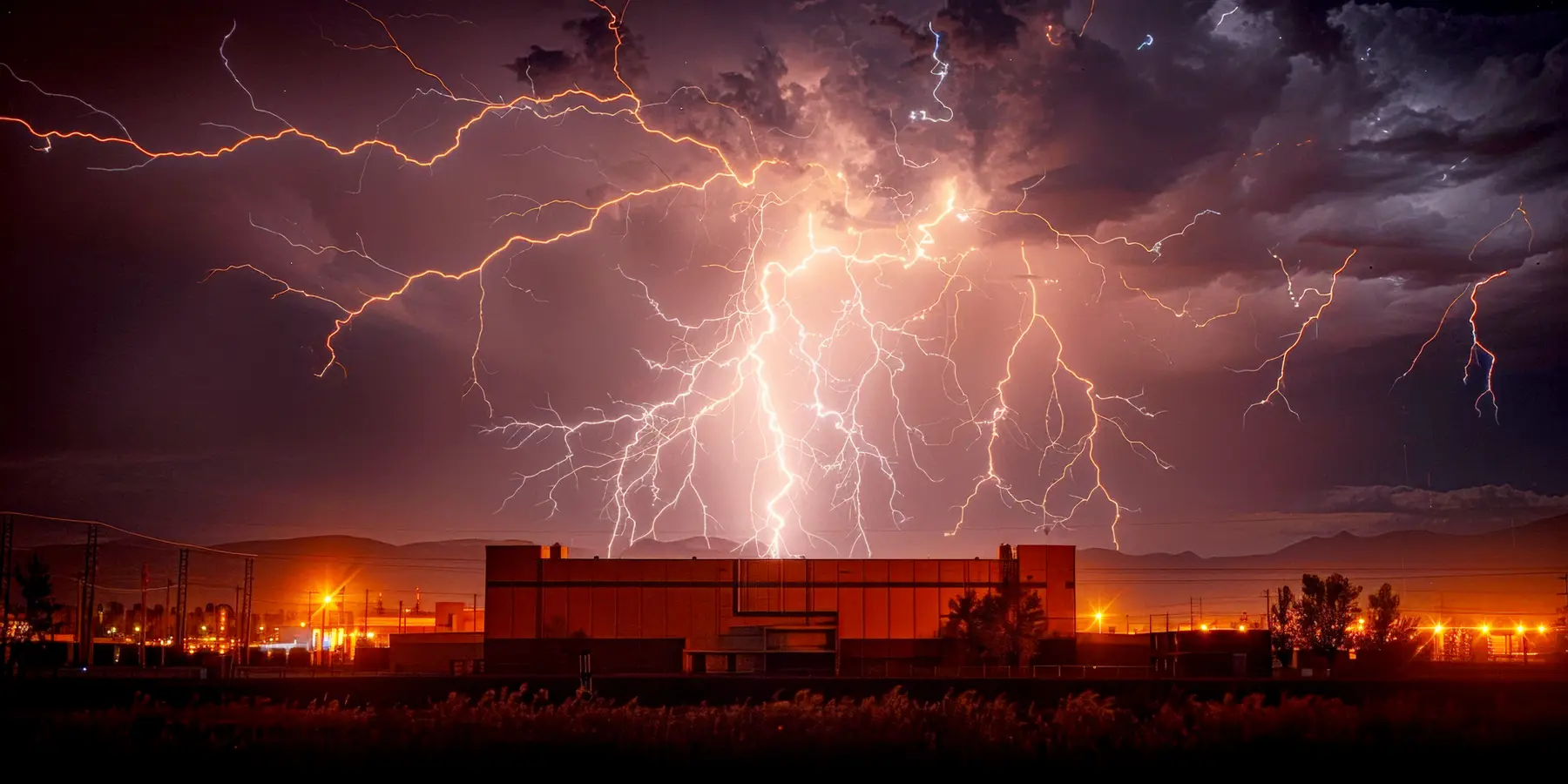
The earth-termination system is the part of a lightning protection system that pushes the strike current into the ground.
It is the set of earth electrodes, rings or foundation steel that the down conductors connect to, and its one job is to spread the captured current into the soil quickly and safely. Under IEC 62305-3 a good earth termination has a low and stable earth resistance and is arranged so the current leaves the structure with the smallest possible rise in potential.
It is easy to treat earthing as an afterthought, a rod in the ground at the bottom of a down conductor, but it is the link the whole system ends on. The air terminations catch the strike and the down conductors carry it down; if the earth termination cannot then get rid of the current cleanly, the rest of the work is undone. This guide explains what the earth termination does, the two electrode arrangements IEC 62305-3 describes, why earth resistance and soil conditions decide the design, why a single bonded earthing system is shared with power and telecoms, and why the earth resistance is read at every periodic inspection rather than once.
What the earth termination is for
A lightning strike delivers a very large current in a very short time. The external lightning protection system gives that current a controlled path: the air termination catches it, the down conductors carry it down the structure, and the earth termination takes it from the bottom of the down conductors and dissipates it into the soil. The earth termination is where the energy finally leaves the building, so the quality of the earthing decides how cleanly the whole system performs.
While the current is flowing into the ground, the electrode and the soil around it rise to a high voltage. The faster and more evenly the current spreads away, the smaller that rise in potential is. A small rise is what keeps the rest of the system safe: it limits side flashing, where the high voltage on the earthing arcs across to nearby buried metal or services, and it keeps the step and touch voltages in the ground near the building small enough not to hurt anyone standing there. A sluggish earth termination, by contrast, holds the structure at a high potential for longer and pushes both of those hazards up.
Type A and Type B earth electrodes
IEC 62305-3 describes two ways of arranging the earth electrodes. They are not ranked best to worst; each suits a different kind of building, and they can be combined on one site.
Individual electrodes at each down conductor
Separate electrodes, vertical rods driven into the ground or horizontal strips laid in a trench, connected to each down conductor but not joined together in a loop. The arrangement is simple and easy to retrofit, which is why it suits small, low-rise and uncomplicated structures. Each electrode does its work locally, so the design depends on getting enough electrode length into the soil at every down conductor.
A ring or foundation earth around the structure
A closed loop instead of separate rods: either a ring electrode buried around the outside of the structure, or a foundation earth electrode formed in the concrete foundations. The loop ties all the down conductors to one earth and gives a more even ground potential under and around the building. It suits larger structures and any building with sensitive electronics inside, where that even potential matters most.
The recommended electrode lengths for each arrangement, and how they change with the lightning protection class and the soil, are given in the standard itself. The principle to carry away is the difference in shape: Type A is a set of local electrodes, Type B is one continuous loop, and the loop is what produces the even, well-coupled earth that larger and more sensitive buildings need.
When each arrangement suits
The choice follows from the size of the structure, what it contains, and the ground it stands on, not from preference.
Type A for small, simple buildings
Low-rise structures, small footprints and retrofits where a continuous ring is impractical. Individual rods or strips at each down conductor are enough to dissipate the current, and they are the easiest to add to an existing building.
Type B for larger and sensitive structures
Bigger buildings, and any structure holding electronic systems that a difference in ground potential could disturb. The ring or foundation earth ties everything to one equipotential earth, which is exactly what those systems need.
Foundation earth for new builds
A foundation earth electrode cast into the concrete is a Type B arrangement that is durable, protected from corrosion and well-coupled to the soil. Designed in at the start, it gives a strong earth at little extra cost and is hard to better as a retrofit.
In practice the two are often mixed: a structure on difficult ground might use a foundation earth ring supplemented with vertical rods where the soil allows, so the arrangement matches both the building and the site rather than following one rule everywhere.
Why a low, stable value matters
The single figure that describes how well an earth termination works is its earth resistance: how easily the electrode lets current spread away into the soil. A low and stable resistance lets the strike current dissipate quickly, so the voltage the electrode rises to during the strike stays modest. That smaller rise in potential is what keeps side flashing unlikely and keeps the step and touch voltages in the surrounding ground small. A high resistance does the reverse, holding the structure at a higher potential for longer and raising both hazards.
It is tempting to reduce this to a single target number, and a value of about ten ohms is often quoted. That ten-ohm figure is common industry practice, not a requirement of IEC 62305-3. The standard does not fix one universal ohm value for every site; instead it favours achieving a low resistance through a recommended electrode length that depends on the lightning protection class and the soil, and through the right electrode arrangement. The sound approach is to follow that length and arrangement guidance for the class and ground, then confirm the resistance is genuinely low and stable, rather than treating a single number as the whole specification.
Soil resistivity and why it shapes the design
The same electrode gives a very different earth resistance in different ground, because the soil itself is part of the circuit. Soil resistivity measures how strongly the ground resists current spreading through it, and it varies widely with soil type, moisture and temperature. Rock, sand and dry ground are high-resistivity and make a low earth resistance hard to reach; clay and consistently moist soil are low-resistivity and make it easier. The same rod that gives an easy low reading in damp clay can give a poor one in dry sand a short distance away.
Because of this, earthing design starts from a measurement of the site's soil resistivity rather than an assumption. Difficult, high-resistivity ground calls for the design to compensate: longer electrodes that reach deeper, moister soil, more electrodes spread out, or a ring or foundation earth that couples to a larger volume of ground. Resistivity also shifts with the seasons, drier in a long summer and after frost, which is one reason a single reading taken once is not enough to characterise a site for the life of the system.
A single bonded earthing system, shared with power and telecoms
A frequent and dangerous instinct is to give lightning its own separate earth, kept apart from the earthing used by power and telecoms. IEC 62305-3 favours the opposite: a single earthing system that serves the lightning protection and is bonded together with the power and telecoms earthing into one. A foundation or ring earth is well suited to being that shared earth, since it already runs around the whole structure.
The reason is straightforward. During a strike the lightning earth is lifted to a high potential for a fraction of a second. If the power and telecoms earths were kept separate, they would stay near their normal voltage, and that large difference in potential would force a flashover between the two earthing systems, often straight through equipment. Bonding everything to one earth removes the difference: the whole installation rises and falls together, so there is no gap in voltage for current to jump across. This is the same equipotential bonding principle that runs through the internal protection of the structure, applied at the earthing.
Step and touch voltage at the earth termination
The earthing is also where two hazards to people are created and controlled. When the strike current spreads out from the electrode, the ground around it sits at different potentials at different distances. Someone standing there can be exposed to a step voltage, between two feet a stride apart on ground at different potentials, and someone touching a down conductor near the ground to a touch voltage, between their hand and their feet. A low earth resistance and an even, well-coupled earth keep both small, which is one more reason the earthing arrangement matters beyond simply getting rid of the current.
A meshed earthing arrangement near the surface helps here, because it makes the ground rise in potential more evenly, so the difference between two nearby points stays small. Step and touch voltage protection is part of the wider Part 3 work, alongside insulation, barriers and signage at the down conductors. For how the standard handles the hazard to life in full, see the IEC 62305-3 guide to the LPS and its inspection.
Why earth resistance is measured at every inspection
An earth termination is correct on the day it is installed and then spends years buried in ground that changes around it. The value that describes it, the earth resistance, drifts. Electrodes and their connections corrode where metal meets soil. Joints loosen. The soil dries out in a long summer, pushing the resistance up until the next wet season. Construction nearby disturbs the ground, cuts a buried conductor or changes the moisture around an electrode. None of this is visible from the surface, and any of it can quietly raise the resistance past the point where the earthing still does its job.
This is why IEC 62305-3 has the earth resistance measured at every periodic inspection, not read once at handover and trusted forever. A single good reading on the day of install proves only that the earthing was sound that day. The value of the measurement comes from trending it across successive inspections: a slow rise from one inspection to the next is the early sign of corrosion or a drying-out problem, caught while it is still a maintenance item rather than after it has become a real loss of protection. The earth resistance reading sits in the inspection report next to the continuity and bonding checks, and read in sequence those readings are the record of whether the earthing has held up.
Where earthing fits in IEC 62305
Earthing is the foundation of the physical protection that Part 3 describes, but it only exists because the Part 2 risk assessment decided the structure needed a lightning protection system and set the class it should be built to. The class feeds straight into the earthing: it influences the recommended electrode length and the arrangement, so the earth termination cannot be judged against a generic checklist, only against the class the structure was designed to. To see how the parts of the standard fit together, start with what IEC 62305 is, and for the full physical system and the inspection that keeps it valid, see the IEC 62305-3 guide.
Questions answered
What is the earth-termination system in lightning protection?
What does the earth termination do in IEC 62305-3?
What are Type A and Type B earth electrodes in IEC 62305-3?
When should you use a Type A or a Type B earth electrode?
Why does a low earth resistance matter for lightning protection?
Does IEC 62305 require a 10 ohm earth resistance?
How does soil resistivity affect earthing design?
Should the lightning earth be separate from the power and telecoms earth?
Why is earth resistance measured at every lightning protection inspection?
Lumex computes the IEC 62305-2 method and shows the working. It does not certify a structure. You may not issue or submit a Lumex output until a competent person, qualified where the structure is located, has reviewed the inputs and the result and signed it.
The tolerable risk in IEC 62305-2 is not a fixed constant. Clause 7.3 NOTE 1 gives RT = 1×10⁻⁵ per year as a representative value of tolerable risk and adds that another value may be set once the case has been investigated in detail. Printed p.12 then lets national or local regulations fix RT, the tolerable frequency of damage FT, and the Annex A, B, C and E calculation rules and parameter values. Every Lumex assessment states the jurisdiction it was computed under and the values that applied.