Assess the site, and know when it is due again
Run the lightning risk assessment behind every protection system you install or audit, under IEC 62305-2:2024, NFPA 780-2026 or AS 1768:2021, and keep a review date on each site. Then plan each periodic inspection and issue its report.
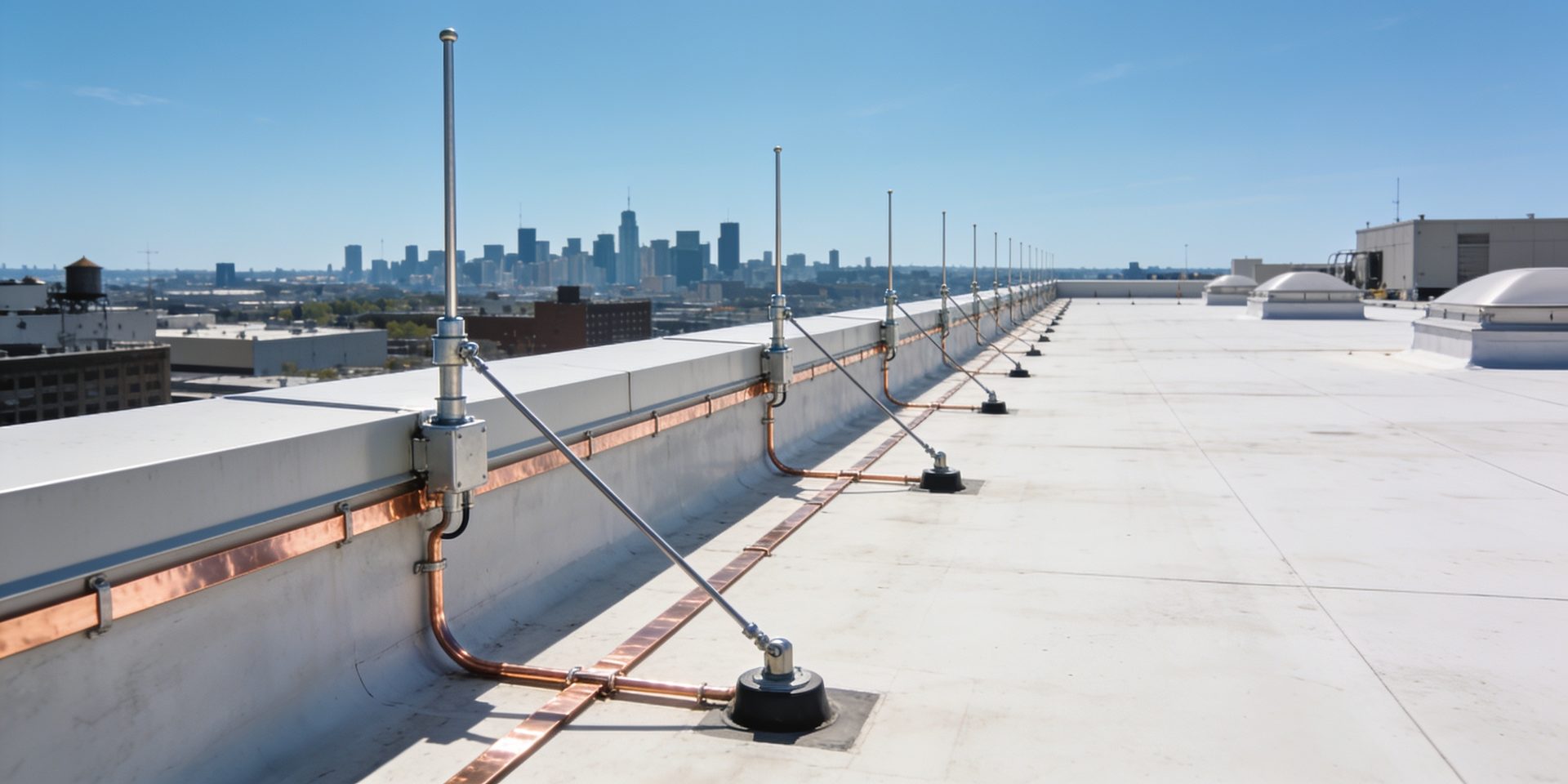
The risk behind the system, on the record
A risk assessment behind every system
A report the owner can file
A client-ready PDF report (with your logo and firm name, full white label on Enterprise), with site photos attached to the assessment, ready to hand over the same day.
A review date on every site
Each assessment carries a review date the engineer sets, with a reminder when it falls due. The protection system you track keeps its own inspection due dates from its standard: every year for NFPA 780-2026, and at least every two years for AS 1768:2021. Every change lands in the audit log.
The protection each standard asks for
The assessment owners and insurers ask for
The least protection, with surge protection built in
The search (C.3.4.2) climbs from LPL IV to LPL I, then adds surge protection, and never offers an LPS without surge protection at the point of entry (4.1, 4.2.1(b)). An explosives store is held to LPL I with point of entry surge protection (Appendix J).
The LPS class and SPDs the risk calls for
The combined risk R and, separately, the frequency of damage F, with the smallest set of measures that brings both within their limits, and the national departures of the site's jurisdiction applied. Jurisdiction profiles are an IEC feature.
From site visit to a review date
Take a common case. An installer in Australia is asked to quote for protecting an existing warehouse, and the owner wants to know whether protection is needed and at what level. The warehouse is an illustration, not a customer.
- Record the site. Create the client and the site, and attach the photos taken on the visit to the assessment.
- Run AS 1768:2021. Enter the structure, its contents and its incoming services. R1 to R4 are each judged against their own tolerable value (Table 2.1).
- Find the least protection. The search (C.3.4.2) climbs from LPL IV to LPL I, then adds surge protection, until all four risks clear, and never offers an LPS without surge protection at the point of entry.
- Hand over the answer. Issue the PDF report to the owner the same day, with the level the quote is built on and every figure traced to its clause.
- Come back on time.
Track the protection and Lumex™ keeps its next inspection within the two years Clause 5.4.4 allows, with a reminder when it falls due.
What the owner receives
A risk assessment report
A client-ready PDF with the verdict, the recommended protection level and the working behind it. See a sample AS 1768 report or a sample NFPA 780 report.
The reason for the level
Why protection is needed and why at that level, under the standard the site works to, so the quote rests on the standard rather than on habit.
A review date on record
The next review date for the site, with a reminder, and an audit log of every change made to the assessment since.
Periodic inspection reports
Inspect the protection you installed or audit to IEC 62305-3, NFPA 780 or AS 1768. Record each visit, have it reviewed and issue a signed report with the next due date.
- Plan each visit and assign it to a surveyor.
- Record the checklist, readings at each test point, defects and photos on the visit.
- Have a reviewer sign the inspection off, then issue the inspection report to the building owner.
- Track each defect through repair and retest.
- Keep the next inspection date from the standard's own interval, and hand an owner one evidence pack.
See what each standard expects on a visit: the NFPA 780 inspection checklist and IEC 62305-3 inspection.
Want to see it on one of your sites? Book a demo.

Proof the owner can check, and every site in one list
A report anyone can verify
Every approved report carries a verification code and a QR code. The owner, an insurer or an auditor scans it or enters the code at lumex.zone/verify and sees the report on record.
A strike record for each site
An inspection portfolio
See every protection system you look after in one list, with its assessment, inspections and repairs. Sort by the next due date and open the overdue sites first.
Questions installers and auditors ask
Why would an LPS installer need a lightning risk assessment?
Does Lumex™ design the layout or certify the installation?
How does Lumex™ set the review date for a site?
Can I attach site photos to an assessment?
Can Lumex™ produce periodic inspection reports?
Get started today