Lightning protection for heritage and historic buildings
Churches, temples, monuments, museums and listed structures are tall, exposed, full of old timber and impossible to rebuild once lost. IEC 62305 is how you decide what protection they need and how to fit it without harming the very fabric you are trying to save. This guide explains why heritage raises the stakes, how the standard is adapted, and what an assessment has to weigh.
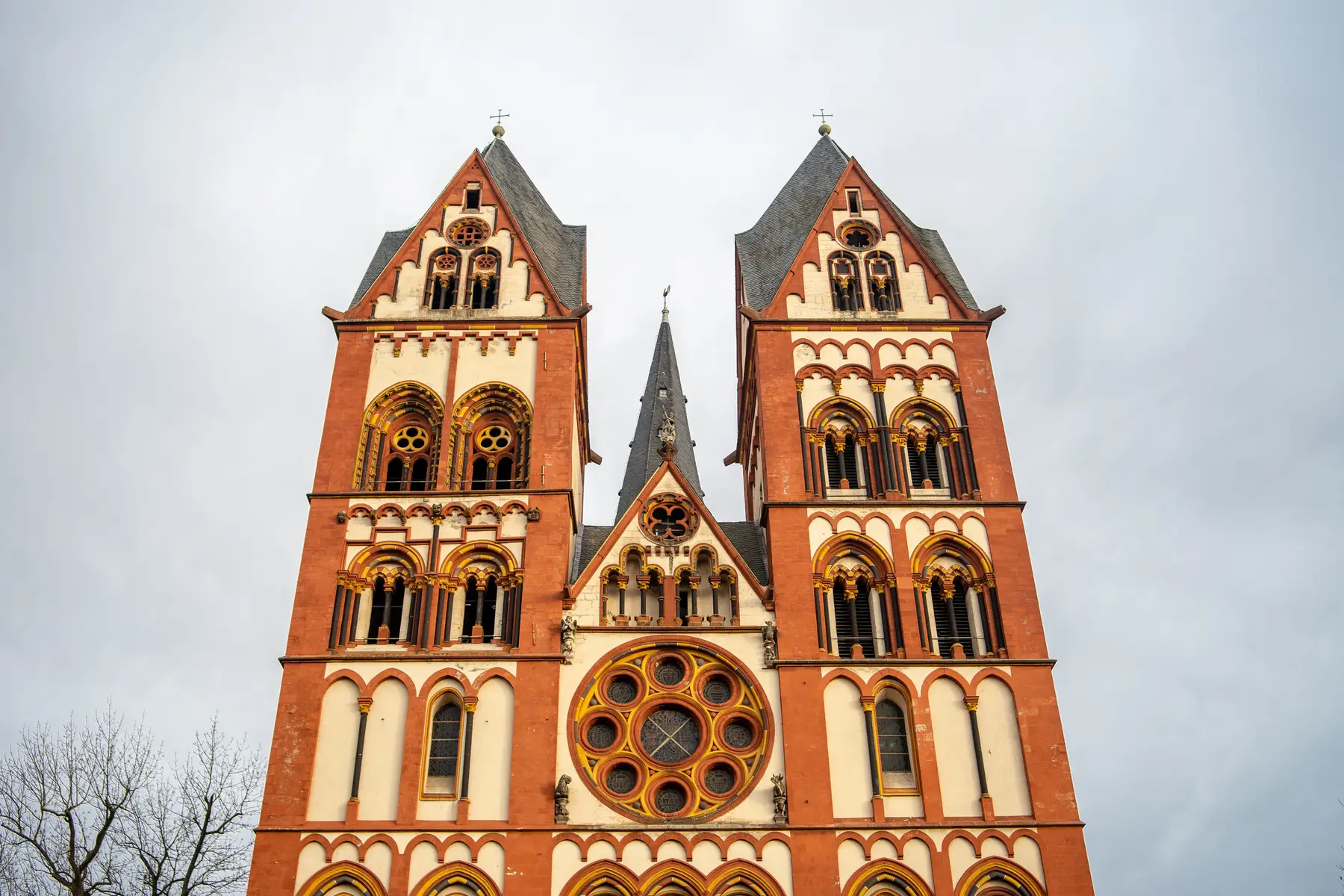
Heritage and historic buildings need lightning protection because what they stand to lose cannot be rebuilt.
A church, temple, monument or museum is often tall, exposed and built from old, dry, combustible material, which makes it both more likely to be struck and more likely to burn when it is. An IEC 62305 risk assessment is how you decide what protection such a structure genuinely needs, and how to fit it without harming the very fabric you are trying to save.
The method is the same one any building uses, but the balance of the problem shifts. The loss here is not mainly economic; it is the permanent disappearance of something of cultural value, which the 2024 edition weighs as physical damage to the structure and its contents. The structures are unusually fire-prone, the people inside are often there in numbers, and the protection has to compete with a duty not to disfigure or damage a protected facade. This guide walks through why heritage raises the stakes, how the risks of cultural loss and life safety apply together, why old buildings burn so readily, how protection is adapted to stay discreet, and the inspection regime that keeps it valid.
Why heritage raises the stakes
The same IEC 62305 method applies, but a handful of things about historic buildings push the risk up and change what a good answer looks like.
The loss is irreversible
An ordinary building can be rebuilt and its contents replaced. A historic structure and what it holds cannot. So the physical damage the standard weighs on a heritage building stands for value that no insurance payout can restore.
Tall and exposed by design
Spires, towers, domes and pinnacles are built to stand above everything around them, which is exactly the geometry that attracts a strike. A heritage building often presents the highest point for some distance, so it collects the hit its neighbours are spared.
Protection cannot disfigure it
On a heritage building the obvious engineering answer is constrained by a duty not to harm a protected facade. The protection has to be effective and discreet at the same time, which is a tension an ordinary building never faces.
Why loss of cultural heritage weighs against value that cannot be recovered
IEC 62305-2:2024 recognises three kinds of loss: injury to human beings (L1), physical damage to the structure and its contents (L2), and failure of internal systems (L3). The 2010 edition carried a separate loss of cultural heritage; the 2024 edition removed it, and the fabric of a heritage building is now weighed as physical damage, L2. That is a change in where the loss sits, not in whether it counts. What makes a heritage structure different is the nature of the damage rather than a category of its own: the contents and fabric cannot be rebuilt, so the loss is measured in the permanent disappearance of something irreplaceable rather than in a sum of money.
That distinction matters because of how the standard judges the result. The verdict is set by the risk of injury to people R against its tolerable risk, and alongside it the assessment weighs the physical damage and fire that would destroy irreplaceable fabric. So a heritage structure can warrant protection on cultural grounds even in cases where a purely economic calculation, weighing the cost of protection against the rebuild value of the bricks, would not justify it. The point is that this loss refuses to be reduced to a replacement price, because it has none. A medieval roof, a centuries-old idol, an original interior, a collection held in a historic museum: their worth is not the cost of the materials, and the assessment is built to respect that.
In practice this means the heritage value of the building is an input to the assessment, not an afterthought. The same structure, judged only on the rebuild cost of its materials, can look like a poor case for protection; judged on what would actually be lost, it needs it. Identifying which loss types genuinely apply to a structure is the first decision in any assessment, and for heritage it is the decision that changes the answer.
Old structures burn readily, and that drives the risk
The headline danger to a historic building is fire, and old buildings are unusually good at burning. Roofs and spires are frequently built from seasoned timber that has dried out over many decades into something close to tinder. Beneath the roof and inside the towers sit large concealed void spaces where a fire can take hold and spread out of sight before anyone notices it. The combination of a tall, strike-attracting top and dry, combustible fabric directly underneath is what makes a heritage building so exposed: the strike lands where the structure rises highest, and the energy then has to pass down through exactly the material most likely to ignite.
The vulnerability does not stop at the fabric. Many historic buildings have limited fire detection, no sprinkler systems by design, and access that makes fighting a fire slow and difficult once it has started. A spire fire high above the ground is hard to reach, and the same height that attracts the strike keeps the fire service away from it. All of this feeds the risk calculation. The chance that a strike causes physical damage, and the loss that follows when it does, both run high for a heritage structure, which is why fire-related protection and the measures that reduce the consequences of a strike weigh heavily in the result.
For how the standard models physical damage and the protection that addresses it, see what is IEC 62305, which sets out the damage and loss model the assessment is built on.
Effective protection that does not disfigure the building
The hardest part of protecting a heritage structure is the conflict between two duties: the protection has to work, and it must not spoil or damage a facade that is itself protected. The conventional methods, an external system of air terminations, down conductors and an earth termination, do not change in principle, but how they are applied does. The standard sets out what the protection must achieve; on a heritage building the engineer has to achieve it in the least visible, least invasive way the structure allows.
Air terminations can be slim and colour-matched to the stone or lead behind them, or tucked behind existing detail so they do not read as additions. Down conductors can be routed sympathetically, following recessed channels, running behind rainwater pipes, or kept to the less visible elevations, and fixed with clips that grip without cutting into significant fabric. Where the standard permits it, existing conductive parts of the building can serve as natural components: a metal spire covering, a cross or finial, metal flashings or a metal roof may already provide part of the path to ground, which removes the need to add a new visible conductor at all. Using what is there, where it qualifies, is often the single best way to keep an installation discreet.
Whether a given component truly qualifies as a natural part of the system, continuous, adequately sized and properly connected, is confirmed during the assessment rather than assumed. For the full treatment of how the air termination is designed and what counts as a natural component, see air termination methods in IEC 62305.
A heritage building cannot be rebuilt to the same specification. Protection has to fit what is already there.
Not damaging what you are there to save
On a heritage building the installation and the inspection are themselves a risk to the fabric. Getting them right is part of the protection, not separate from it.
Fix without cutting into fabric
Fixings are placed to avoid drilling into significant stone, plaster or timber, and conductors follow existing joints, mortar lines and architectural detail rather than carving new routes across a protected surface.
Work alongside conservators
A lightning engineer on a heritage building rarely works alone. Conservation specialists are involved so the protection decision and the duty to the fabric are reconciled, and any intervention can be consented and recorded.
Prefer reversible work
Where new components must be added, the least permanent option that does the job is chosen, so a future change leaves no lasting scar. Reversibility is a conservation principle that maps neatly onto good protection design.
Document for next time
The installation is recorded so that later inspection and maintenance can repeat the same access and the same fixings without fresh damage. Good documentation is what stops every inspection becoming a new intervention on the fabric.
Life safety applies too: many heritage sites are full of people
It is easy to think of a heritage building as a relic to be preserved and forget that it is usually still in use, often by a great many people at once. A congregation fills a church or cathedral for a service. Pilgrims gather at a temple, sometimes in very large numbers on a festival day. Visitors tour a monument or move through a historic museum throughout the day. Wherever people are present in numbers, the risk of injury to people, R, is the figure the assessment must bring below its tolerable value, and the threat to irreplaceable heritage weighs alongside it, the same life-safety risk that leads a hospital assessment where the people inside cannot simply walk away from a hazard.
This is not a minor addition. On a busy heritage site the life-safety and cultural-loss cases reinforce one another rather than compete: the same strike that threatens the building threatens the people inside it. A worked assessment for a place of worship or a visitor attraction therefore has to bring the risk of injury to people below its tolerable value while also driving down the physical damage and fire that would destroy irreplaceable fabric, and the protection chosen has to do both together.
Inspecting a structure that is rarely altered but slowly weathers
A heritage building is, in one sense, an easy structure to maintain a protection system on: the fabric is rarely altered, so the system is not constantly disturbed by extensions, re-roofing or new plant the way a working commercial building is. But the same stillness hides a slow problem. The protection still weathers. Conductors corrode, fixings loosen, joints degrade and a clip that was sound twenty years ago works free. None of this is visible from the ground, and on a structure that no one is regularly working on, it can go unnoticed until the protection has quietly stopped doing its job.
That is why the periodic inspection regime matters as much for heritage as for anything else. IEC 62305-3 sets out routine visual checks and fuller inspection and testing on a regular cycle, and a heritage system needs that discipline kept up so a scheme installed decades ago is verified to still be intact and connected. The inspection itself has to be planned with the same care as the installation, because reaching a spire or a roofline means scaffolding and contact with delicate surfaces, and a careless inspection can do the damage the protection was meant to prevent.
For what an inspection covers and how often it is due, see IEC 62305-3 inspection and testing.
A heritage assessment, with every decision recorded
A heritage building puts an unusual weight on the parts of the assessment that are easiest to get wrong: which losses genuinely apply, how the cultural and life-safety risks sit together, and the justification behind every protection decision a conservation officer or insurer will later question. Lumex runs the 62305-2 risk method exactly as it does for any structure, but keeps every figure traced back to the clause behind it, so the reasoning for treating a building as heritage, and for the protection chosen, is laid out rather than assumed.
New to the standard? Start with what is IEC 62305, read how the protection is designed in air termination methods, then see the Lumex platform for how a heritage assessment is produced and documented end to end.
Questions answered
Why do heritage and historic buildings need lightning protection?
How does IEC 62305 weigh the loss of cultural heritage?
Why are old buildings so vulnerable to lightning fire?
How do you protect a listed building without harming its appearance?
Does the risk of injury to people apply to heritage sites too?
Can existing metalwork be used as part of the protection?
How do you avoid damaging historic fabric during installation or inspection?
How often does a heritage lightning protection system need inspecting?
Is lightning protection a requirement for heritage and listed buildings?
Lumex computes the IEC 62305-2 method and shows the working. It does not certify a structure. You may not issue or submit a Lumex output until a competent person, qualified where the structure is located, has reviewed the inputs and the result and signed it.
The tolerable risk in IEC 62305-2 is not a fixed constant. Clause 7.3 NOTE 1 gives RT = 1×10⁻⁵ per year as a representative value of tolerable risk and adds that another value may be set once the case has been investigated in detail. Printed p.12 then lets national or local regulations fix RT, the tolerable frequency of damage FT, and the Annex A, B, C and E calculation rules and parameter values. Every Lumex assessment states the jurisdiction it was computed under and the values that applied.